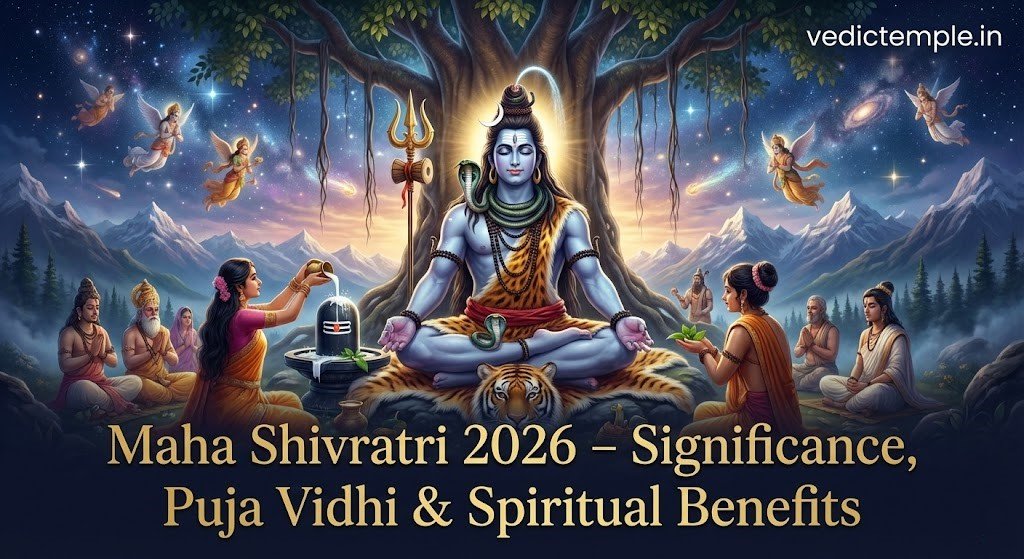
We are just five days away from the most potent night in the spiritual calendar. Maha Shivratri, or "The Great Night of Shiva," is not merely a festival; it is a cosmic phenomenon. While most festivals are celebrated during the day, this one is celebrated at night. While other festivals are about feasting, this one is about fasting.
On Sunday, February 15, 2026, millions of devotees across the globe will stay awake, chant the name of Shiva, and immerse themselves in the infinite void of the Shiva Tattva.
But why is this specific night so important? Is it just a religious tradition, or is there a scientific and spiritual reason behind the sleepless night (Jagaran)? Whether you are a devout bhakt or a spiritual seeker, understanding the mechanics of this night can transform your life.
Here is your complete guide to Maha Shivratri 2026, including its significance, the correct Puja Vidhi, and the immense benefits it holds for you.
The Significance: Why We Celebrate Maha Shivratri
Maha Shivratri falls on the 14th day of the dark fortnight in the month of Phalguna. It is the darkest night of the month. In spiritual lore, darkness is not evil; it is the lap of creation. It is the nothingness from which everything comes and to which everything returns.
The Marriage of Shiva and Shakti
The most popular legend states that this is the night Lord Shiva (Purusha/Consciousness) married Goddess Parvati (Prakriti/Nature). It represents the union of the passive spirit and active energy. It is the night where the "Stillness" meets the "Dance."
The Night of the Tandava
Another legend says that on this night, Shiva performs the Rudra Tandava—the cosmic dance of creation, preservation, and destruction. The vibration of the universe is reset on this night.
The Legend of the Lingam
It is believed that on this night, Shiva first manifested himself in the form of a Lingam (a pillar of light with no beginning and no end) to settle a dispute between Brahma and Vishnu. Hence, worshipping the Shivling on this night is considered the highest form of devotion.
Maha Shivratri 2026 Date & Auspicious Muhurat
This year, the festival is extra special because it falls on a Sunday (Feb 15), the day of the Sun (Surya), who is considered the eye of Shiva.
Date: Sunday, February 15, 2026.
Chaturdashi Tithi Begins: Feb 14, 2026, at 10:45 PM (Approx).
Chaturdashi Tithi Ends: Feb 15, 2026, at 11:10 PM (Approx).
Nishita Kaal (The Most Auspicious Time for Puja): 12:09 AM to 01:01 AM (Feb 16). Note: This midnight window is when the Shiva energy is at its absolute peak.
Puja Vidhi: How to Worship Lord Shiva at Home
You do not need a grand temple to please Bholenath (The Innocent One). He is pleased with the simplest of offerings: a pure heart and a pot of water. Here is the step-by-step procedure.
1. Preparation (Sankalp)
-
Wake up early (Brahma Muhurat) on Feb 15. Take a bath and wear clean (preferably white) clothes.
-
Take a vow (Sankalp) that you will observe a fast (Vrat) today and perform the puja with devotion.
-
Set up your altar. Place a Shivling or a picture of Lord Shiva facing East or North.
2. The Abhishekam (The Bathing Ritual)
This is the heart of the puja. If you have a Shivling, place it on a plate or a dedicated stand (Jalahari). You must bathe Shiva with the following items in this specific order:
-
Water (Jal): To purify.
-
Raw Milk (Dudh): For purity and piety.
-
Curd (Dahi): For prosperity and children.
-
Honey (Shahad): For sweet speech and removing sorrow.
-
Ghee: For moksha (liberation).
-
Sugar: For happiness.
-
Water again: To rinse everything off.
Chant "Om Namah Shivaya" continuously while pouring the liquids.
3. The Offerings (Shiva’s Favorites)
Once the Lingam is clean, apply a paste of Sandalwood (Chandan) and Vibhuti (Holy Ash). Then, offer the following:
-
Bilva Patra (Bel Leaves): This is mandatory. Offer 3 or 108 leaves. Ensure the smooth side touches the Lingam.
-
Dhatura & Akanda Flowers: These are wild flowers loved by Shiva.
-
Ber (Jujube fruit): Symbolizing longevity.
-
Incense & Diya: Light a Ghee lamp and incense sticks.
4. The Prayer & Aarti
Recite the Shiva Chalisa or the Lingashtakam. End the puja by performing the Aarti with camphor (Kapur).
The Four Prahara Puja: For the Committed Devotee
If you plan to stay awake all night (Jagaran), the night is divided into four quarters (Praharas). It is recommended to perform Abhishekam at each quarter with different materials.
First Prahara (6:00 PM - 9:00 PM)
-
Abhishekam: Milk.
-
Mantra: Om Hreem Ishanaya Namah.
-
Benefit: Grants knowledge and peace.
Second Prahara (9:00 PM - 12:00 AM)
-
Abhishekam: Curd.
-
Mantra: Om Hreem Aghoraya Namah.
-
Benefit: Grants wealth and children.
Third Prahara (12:00 AM - 3:00 AM)
-
Abhishekam: Ghee.
-
Mantra: Om Hreem Vamadevaya Namah.
-
Benefit: Grants fulfillment of desires.
Fourth Prahara (3:00 AM - 6:00 AM)
-
Abhishekam: Honey.
-
Mantra: Om Hreem Sadyojataya Namah.
-
Benefit: Grants Moksha (Liberation).
Spiritual & Scientific Benefits of Maha Shivratri
Why do the Rishis insist on staying awake with an upright spine on this night? It is not just ritual; it is science.
1. The Upward Surge of Energy
On Maha Shivratri, the northern hemisphere of the planet is positioned in such a way that there is a natural upsurge of energy in the human body. If you lie down (sleep), this energy cannot flow up your spine properly. By sitting upright and staying awake, you allow this cosmic energy to rise from the Muladhara (Root Chakra) to the Sahasrara (Crown Chakra), leading to spiritual awakening.
2. Conquering the Mind (Moon)
The moon rules the mind. On Shivratri (just before the New Moon), the moon is almost invisible. This means the influence of the mind and emotions is at its weakest. This is the best time to transcend the mind and experience the "No-Mind" state (Shiva). It is the easiest night to meditate.
3. Detoxification of Karma
Fasting (Upavasa) detoxifies the body, while Chanting (Mantra) detoxifies the mind. The combination of fasting and sleeplessness breaks the patterns of your daily habits, allowing you to break free from past Karma.
Do’s and Don’ts for Maha Shivratri
To get the maximum benefit, keep these guidelines in mind.
What to Do
-
Do keep your spine straight throughout the night.
-
Do chant Om Namah Shivaya mentally or verbally.
-
Do visit a Shiva temple if possible.
-
Do practice forgiveness. Shiva is the destroyer of sins; forgive others to free yourself.
What NOT to Do
-
Do Not consume Tulsi leaves (Tulsi is forbidden for Shiva puja; use Bilva instead).
-
Do Not offer Kumkum or Haldi to the Shivling (use Chandan/Ash).
-
Do Not consume heavy, tamasic food (meat, alcohol, onions, garlic).
-
Do Not sleep during the day or night.
Conclusion: Become Shiva
Maha Shivratri 2026 is an invitation. It is not an invitation to a party, but an invitation to dissolve. Shiva is not a person; Shiva is a dimension. He is "That which is not."
This February 15, don't just perform the ritual mechanically. Pour the water with love. Chant the mantra with awareness. Sit in the silence of the night and let the energy rise.
If you can surrender yourself on this Great Night, you won't just find Shiva; you will realize that you are Shiva.
Har Har Mahadev!
Next Steps for You
-
Prepare your Puja Thali: Buy Bilva leaves and Rudraksha beads before the weekend rush.
-
Plan your Fast: Decide if you will do a "Nirjala" (No water) or "Phalahar" (Fruit only) fast.
-
Visit VedicTemple.in: To book a Laghu Rudra Puja or Mahamrityunjaya Jaap in your name on the auspicious night of Feb 15.
May Lord Shiva bless you with peace and liberation!