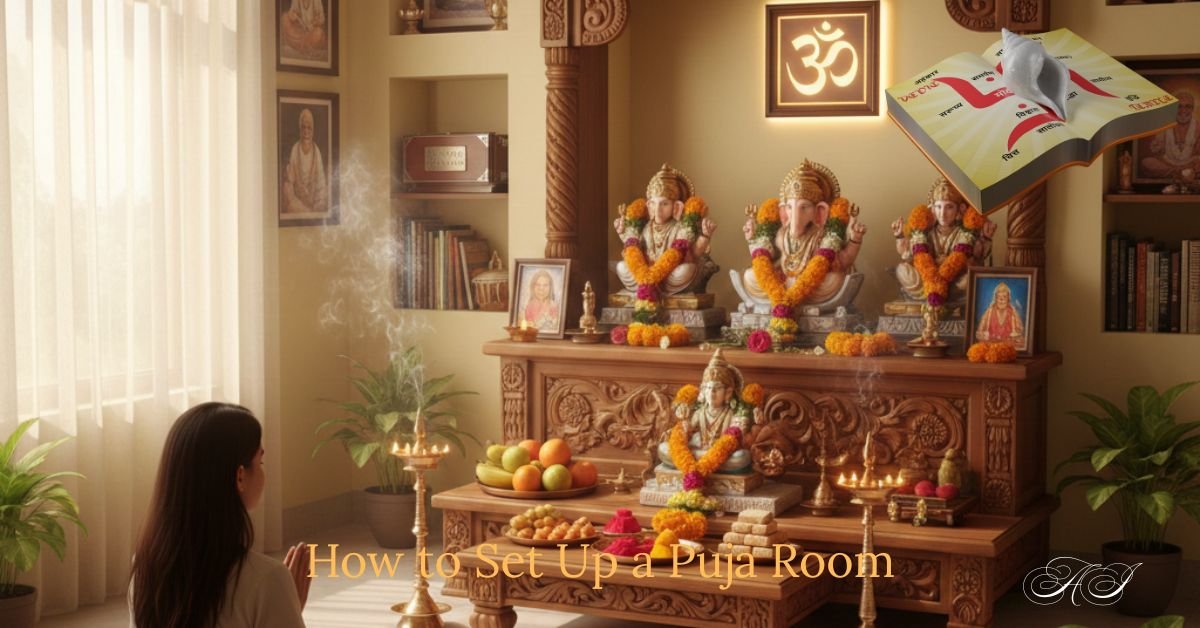
How to Set Up a Puja Room: Creating Sacred Space in Your Home
The thing about a puja room is that you don't actually need much to start. People overthink it. They wait for the perfect corner, the perfect furniture, the perfect setup. Meanwhile, months pass and they still don't have one.
The real secret? Start where you are. With what you have. Then build from there.
A puja room is just a space where your mind naturally settles into something deeper. That's it. Everything else is supporting that one thing.
Pick a Corner That Feels Right
You need a spot that's relatively quiet and private. Somewhere you won't be interrupted every two minutes. It doesn't have to be big. A corner of your bedroom works. A nook in your living room works. Even a small shelf in a hallway can become a proper puja space if it's treated with respect.
If you have options, facing east or north is traditionally considered better. But if your best quiet spot faces south? Use it anyway. A consistent, peaceful puja space facing south beats an inconsistent one facing the "perfect" direction.
Avoid places that feel chaotic. Don't set up puja right next to the TV or next to the kitchen where there's constant noise and activity. Your mind needs a chance to shift gears when you sit there.
The location should feel intentional. Not like you're praying in the middle of passing traffic.
The Physical Setup Doesn't Need to Be Complicated
You have three basic options depending on space:
Option 1: Dedicated Mandir (Temple)
If you have budget and space, a wooden or marble temple structure is beautiful. It looks intentional. It creates a focal point. But it's also the most expensive route and takes up the most space.
Option 2: Wall Shelf
A simple wooden shelf, cleaned regularly and covered with a nice cloth. This works perfectly fine. Mount it at a height where you're looking slightly up at the deities when you sit—chest level or slightly higher.
Option 3: A Small Table or Cabinet
Put a solid, smaller table in your corner. Cover it with a clean white or colored cloth. Use it only for puja—nothing else. No bills, no random stuff, no leftover tea cups.
The key with any setup: It should feel separate from the rest of your home. When you sit there, your mind should recognize that something different is happening.
What Actually Goes on the Altar
Here's where people get lost in details. Keep it simple.
You need:
-
One to three main deities that matter to you. Not the whole pantheon. Ganesha is common because he removes obstacles—universal relevance. Shiva if that's your path. Lakshmi-Narayan. Your family deity. Your guru's photo. Pick what genuinely calls to you.
-
A diya (lamp). Brass, clay, or steel. You'll light this regularly with ghee or oil.
-
Incense or dhoop. Creates atmosphere and purifies the space.
-
A bell. To mark the beginning of your practice and focus your mind.
-
A small pot (lota) for water offerings.
-
Flowers. Fresh ones when possible. Even one flower matters more than a dusty garland from three weeks ago.
-
Kumkum and chandan. For tilak (the marks).
That's genuinely all you need to start. Everything else is optional add-ons.
Keep supplies in a small drawer or basket right next to the puja space so you're not hunting for things every single time. Friction kills practice. Make it easy.
The Cleanliness Part Is Non-Negotiable
This is where a lot of people fail. They set up a beautiful puja room and then let it get dusty and neglected.
Daily:
-
Wipe the altar with a clean cloth
-
Remove old flowers
-
Clean out the diya holder
-
Keep the floor around it clean
If you won't do this regularly, your puja room just becomes another dusty corner of your house that makes you feel guilty.
The practice of cleaning itself is spiritually significant. When you physically clean the space, you're also cleaning your mind. By the time you sit down for puja, you've already shifted into a different state just through the act of tidying.
A well-maintained puja room—even if it's tiny and simple—feels sacred. A neglected fancy mandir just feels sad.
Light and Atmosphere Matter
The diya should be your main light source in the evening. That small flame creates something that no electric light can replicate. It's warm, it's alive, it draws your attention naturally.
During the day, natural light is best. If that's not possible, a soft warm bulb is better than harsh white fluorescent light directly overhead.
The smell from incense or dhoop should be noticeable but not overwhelming. You're creating an atmosphere, not fumigating the room. Sandalwood, rose, jasmine—traditional scents work because they're grounding and calming.
Sound: A bell to mark the beginning. Maybe a simple recording of a mantra or bhajan playing softly. But keep it peaceful. A puja room isn't a concert.
How You Actually Use It Matters Most
The most important part of a puja room isn't how it looks. It's that you actually use it.
Pick a time—morning is ideal, but evening works fine too—and commit to it. Even 10 minutes.
Sit. Light the diya. Ring the bell. Offer water and a flower. Chant a simple mantra or read a verse. Sit in silence for a few minutes. Done.
That's a complete puja. It doesn't require elaborate ritual. It requires showing up, regularly, with genuine intention.
What happens over weeks and months: The space develops energy. Your mind recognizes it. The moment you sit there, something shifts. Your breathing slows. Your thoughts settle. That's what a puja room actually does.
Common Mistakes
Don't turn it into a storage room for stuff that has nowhere else to go. Don't let it get dusty because you're "too busy." Don't set it up and then never use it. Don't wait for the perfect setup before starting.
Start now. With what you have. In the space available to you. Even if it's just a small corner with one idol and a diya.
The puja room becomes sacred through use, not through decoration.