The Sacred Science of the Shivratri Fast
On Sunday, February 15, 2026, millions of devotees will embark on a spiritual journey. They will set aside their daily routines, pause their worldly cravings, and observe the Maha Shivratri Vrat (Fast).
In the modern world, we often view fasting as a diet trend or a way to lose weight. However, in the Vedic tradition, fasting—or Upavasa—has a much deeper meaning. The word Upavasa literally means "To stay near" (Upa = Near, Vasa = Stay). It implies staying near the Divine.
When your stomach is full, your energy is concentrated on digestion. You feel lethargic, sleepy, and grounded in the physical body. But on the Great Night of Shiva, the planetary positions create a natural upsurge of energy. To ride this wave, your body needs to be light, alert, and empty.
Fasting on Maha Shivratri is not about starving yourself; it is about purifying your system so that you can remain awake and aware (Jagaran) throughout the night. Whether you are a seasoned devotee or a first-timer, following the correct dietary rules is crucial to maintaining the sanctity of the fast.
Here is your complete guide on What to Eat and What to Avoid to maximize the spiritual benefits of this powerful night.
Types of Fasting: Choose Your Level
Before you stock up your kitchen, you must decide which type of fast you are physically capable of observing. Shiva appreciates devotion, not torture. Choose a method that suits your health.
1. Nirjala Vrat (The Strict Fast)
This is the most intense form of fasting. Nir means "without" and Jala means "water." In this fast, the devotee does not consume a single drop of water or any food from sunrise on Feb 15 until sunrise on Feb 16.
-
Who is it for? Strictly for healthy individuals with prior experience in fasting.
-
Benefits: It creates immense heat (Tapas) in the body, burning away karma and lethargy.
2. Phalahar Vrat (The Fruit Fast)
This is the most common form of fasting. Phala means "fruit" and Ahar means "diet." In this fast, devotees abstain from grains and cooked meals but consume fruits, milk, and water to keep their energy levels up.
-
Who is it for? Working professionals, students, and beginners.
-
Benefits: It keeps the stomach light and the mind alert without causing exhaustion.
3. The Satu/Milk Fast
Some devotees, particularly the elderly, opt for a liquid diet comprising only milk, tea, or buttermilk throughout the day.
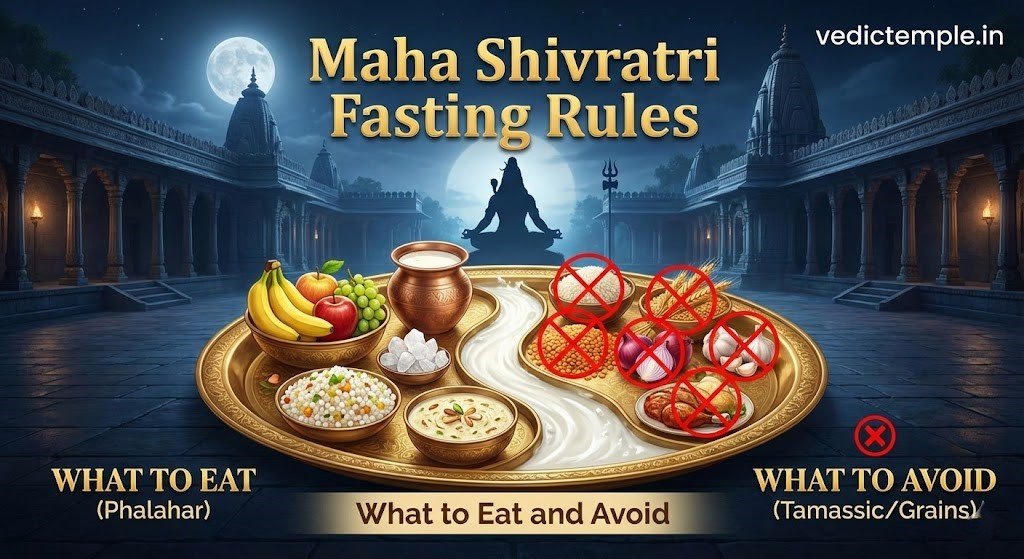
What to Eat: The Allowed 'Sattvic' Foods
If you are observing the Phalahar Vrat, you are allowed to eat specific foods that are considered Sattvic (pure). These foods provide energy but do not induce sleep or excitement.
Fruits and Nuts
Nature’s fast food is your best friend today.
-
Fresh Fruits: Apples, bananas, papayas, melons, and pomegranates are excellent. They digest quickly (within 3 hours), keeping your system empty for the night vigil.
-
Dry Fruits: Almonds, walnuts, dates, and raisins provide concentrated energy. A handful of soaked almonds in the morning can sustain you for hours.
Dairy Products
Milk is sacred to Lord Shiva (used in Abhishekam) and is a staple for the fast.
-
Items: Milk, curd (yogurt), paneer (cottage cheese), ghee, and buttermilk.
-
Tip: Drink warm milk with a few strands of saffron or almonds at night to stave off hunger pangs during the Jagaran.
Vrat-Friendly Flours and Grains
Since regular grains are forbidden, you can use these alternatives to make Roti or Poori:
-
Kuttu ka Atta (Buckwheat Flour): Warming and energetic.
-
Singhare ka Atta (Water Chestnut Flour): Cooling and light.
-
Rajgira (Amaranth): High in protein.
-
Sabudana (Tapioca Pearls): The most popular fasting food. Sabudana Khichdi or Kheer is a classic Shivratri meal.
Root Vegetables
-
Potatoes: Boiled, roasted, or cooked in ghee with cumin seeds (Jeera).
-
Sweet Potatoes: Excellent for slow-releasing energy.
-
Yam (Suran): Often consumed in certain regions.
The Only Salt Allowed: Sendha Namak
This is the most critical rule. You cannot consume regular table salt (sea salt) because it is chemically processed.
-
Use Rock Salt (Sendha Namak): This is the purest form of salt, unprocessed and rich in minerals. It helps maintain electrolyte balance during the fast.
Spices and Condiments
-
Allowed: Cumin seeds (Jeera), Black Pepper (Kali Mirch), Green Cardamom (Elaichi), and Ginger.
-
Why: These aid digestion and keep the body warm.
What to Avoid: The Forbidden 'Tamasic' Foods
The purpose of the fast is to reduce Tamas (inertia/sleep). Therefore, any food that creates heaviness or stimulates the senses too much is strictly prohibited.
1. Grains and Cereals
Strictly avoid Wheat, Rice, Maize, Millet, and Semolina (Sooji).
-
The Reason: Grains take a long time to digest. They draw energy to the stomach, making the mind dull and sleepy, which defeats the purpose of the night vigil.
2. Pulses and Lentils (Dal)
Avoid all kinds of Dals, Beans, and Soy.
-
The Reason: Legumes are heavy on the digestive system and can cause gas or bloating, distracting you from meditation.
3. Table Salt
As mentioned above, iodized sea salt is strictly forbidden. If you eat anything with regular salt, the fast is considered broken.
4. Non-Vegetarian Food
Strictly avoid Meat, Eggs, and Fish.
-
The Reason: Killing another being for food carries the vibration of pain and fear. On a day dedicated to consciousness, consuming dead matter lowers your vibration instantly.
5. Onion and Garlic
These are categorized as Rajasic and Tamasic.
-
The Reason: While they have medicinal properties, in Ayurveda, onion and garlic are known to increase heat, anger, and passion in the body. During a fast, you want a calm mind, not an agitated one.
6. Alcohol and Tobacco
This goes without saying. Consumption of intoxicants on Maha Shivratri is considered a grave sin and detrimental to spiritual progress.
7. Turmeric (Haldi)
While turmeric is healthy, many traditions avoid it during fasting because it is used in regular cooking. It is safer to stick to Jeera and Black Pepper for flavor.
A Sample Diet Plan for Feb 15
If you are confused about how to structure your day, here is a simple plan for a Phalahar Vrat.
Morning (Brahma Muhurat):
-
Wake up, bathe, and take your Sankalp (Vow).
-
Drink a glass of warm water with honey and lemon to detox.
Breakfast (9:00 AM):
-
A bowl of mixed fruits (Bananas/Apples).
-
A glass of warm milk with a few almonds.
Lunch (2:00 PM):
-
Sabudana Khichdi cooked with ghee, peanuts, and Sendha Namak.
-
A bowl of curd (yogurt) to keep the body cool.
Evening (6:00 PM - Sunset):
-
Tea or Coffee (if you are accustomed to it).
-
Roasted Makhana (Fox Nuts). These are light, crunchy, and perfect for snacking.
Dinner (Before the Night Vigil begins):
-
Many devotees stop eating after sunset. However, if you need strength, have Kuttu ki Puri with Aloo ki Sabzi (made with rock salt).
-
Alternatively, just a glass of Badam Milk.
During the Night (Jagaran):
-
Keep hydrating with water (unless it’s Nirjala).
-
You can have fruits if you feel dizzy, but try to keep the stomach empty to assist the rising energy.
Breaking the Fast (Parana)
The fast must be broken at the specific Parana Time on the next day, Monday, Feb 16.
-
Time: Between 06:57 AM and 03:25 PM.
-
Method: Take a bath, offer a simple prayer to Lord Shiva, and then consume simple food. Avoid heavy, spicy, or oily food immediately after breaking the fast as your stomach will be sensitive.
Conclusion: Fasting is Feasting for the Soul
Maha Shivratri is not a test of your starvation skills; it is a test of your willpower. When you deny the body food, you feed the soul. By following these dietary rules on February 15, 2026, you are preparing your vessel to receive the immense grace of Shiva.
Remember, the most important ingredient in your fast is not the Sabudana or the Milk—it is your Devotion (Bhakti). If you fast with a pure heart and a focused mind, Lord Shiva accepts your effort and blesses you with health, peace, and spiritual awakening.
Om Namah Shivaya!